When to Walk Away: Knowing the Difference Between Entertainment and Risk
Is gambling still fun or becoming a problem? Learn the signs of risk, how to assess your habits, and actionable steps to walk away safely.

For many, placing a bet is a harmless thrill—a way to add excitement to a sports match or enjoy a night out with friends. But the line between recreational entertainment and financial risk is thinner than most realize. Knowing when to walk away isn’t just about saving money; it’s about preserving your mental well-being.

Gambling is designed to be engaging, and the transition from “fun” to “compulsion” often happens gradually. You might not notice the shift until the stakes have risen too high. This guide is designed to help you honestly assess your habits, recognize the warning signs, and take control before a pastime becomes a problem.
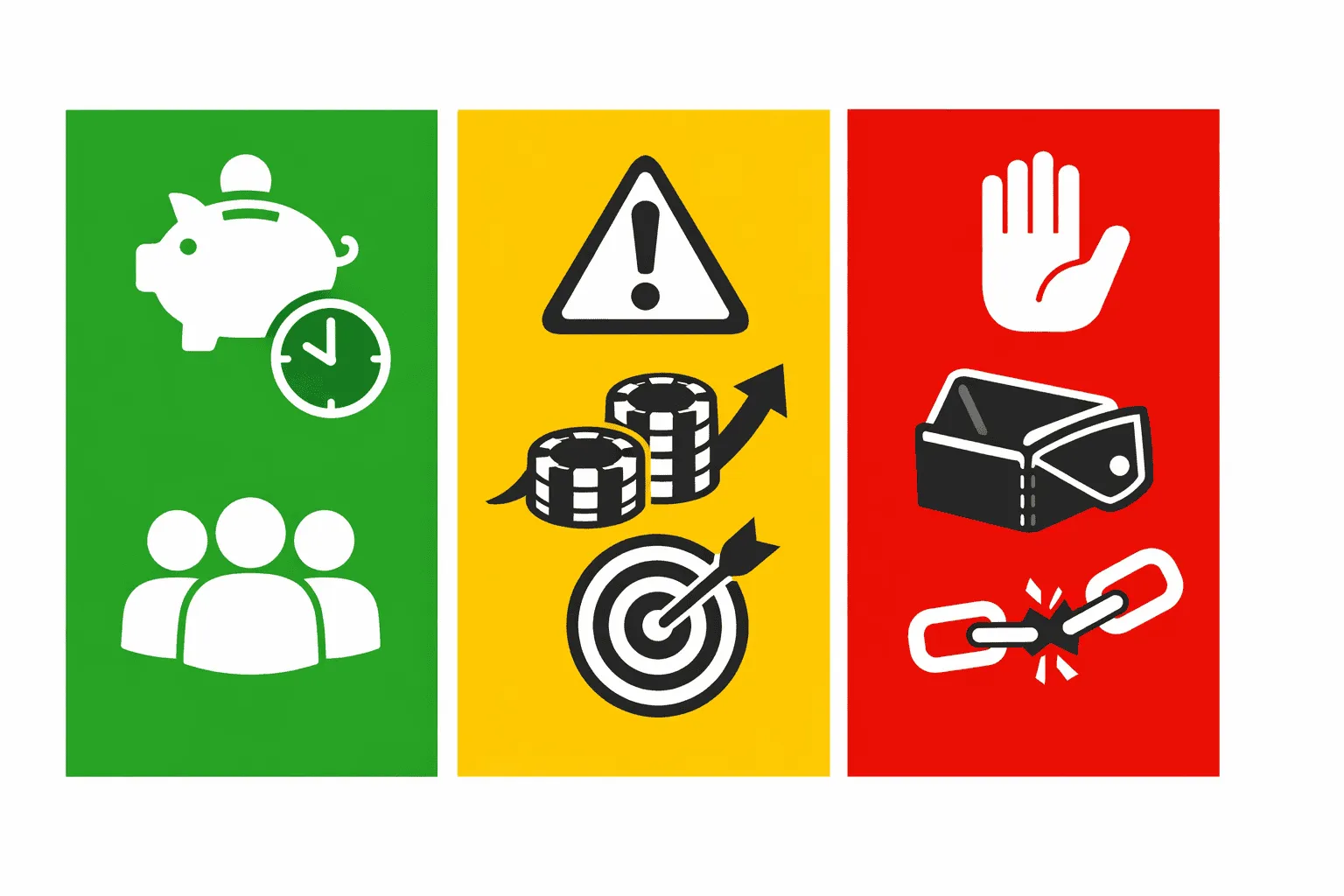
The Green Zone: Defining Recreational Gambling
To understand when gambling becomes risky, we first need to define what healthy gambling looks like. In the industry, this is often referred to as “responsible gaming,” but a better term might be sustainable entertainment.
Recreational gambling shares the same characteristics as other hobbies, like going to the movies or dining out. It involves:
- Fixed Budgets: The money used is disposable income—money you are fully prepared to lose in exchange for the experience.
- Time Limits: Gambling occupies a small, specific window of your time and does not interfere with work, family, or sleep.
- Outcome Independence: You hope to win, but you expect to lose. A loss doesn’t ruin your day, and a win is treated as a lucky bonus, not a paycheck.
- Social Connection: It is often done socially, rather than in isolation.
If your gambling habits fit this description, you are likely in the “Green Zone.” The activity is functioning as intended: a form of paid entertainment. If you’re newer to online play, you may also want to browse our overview of online casinos to better understand the environments and tools available.
The Yellow Zone: The Subtle Shift to Risk
Most people don’t wake up one day with a gambling addiction. It starts with small changes in behavior and mindset. This is the “Yellow Zone,” where the activity is no longer purely entertainment but isn’t yet a full-blown crisis.
If you recognize yourself in the following behaviors, you may be drifting toward risk:
1. Chasing Losses
This is the most common and dangerous shift. “Chasing” occurs when you try to win back money you’ve lost by betting more. The mindset shifts from “I paid $50 for a night of fun” to “I need to get that $50 back.” Once you are playing to recover losses rather than to enjoy the game, you have crossed the line into risk. A solid foundation in risk management in gambling can help you set guardrails before chasing takes over.
2. Increasing the Stakes (Tolerance)
Just like with chemical substances, the brain builds a tolerance to the dopamine release of gambling. The $10 bet that used to provide a rush now feels boring. You find yourself needing to bet $50 or $100 to feel the same level of excitement. This constant need to “up the ante” is a clear warning sign.
3. The “Near Miss” Fallacy
Are you convincing yourself that you “almost won”? In games of chance (like slots or roulette), a near miss is mathematically identical to a total miss. However, the risky gambler interprets a near miss as a sign that a win is imminent, encouraging them to keep playing longer than planned.
Read more about why “near misses” can feel so compelling here: near-miss effect. It can also be helpful to understand related thinking traps like the gambler’s fallacy and the fallacy of the maturity of chances, which can quietly fuel “just one more bet” decisions.
The Red Zone: When to Stop Immediately
If the behaviors above are left unchecked, they can spiral into the “Red Zone.” At this stage, gambling is no longer a choice; it feels like a necessity. If you experience these signs, it is time to stop immediately and seek professional support.
- Gambling with Essential Funds: Using rent, grocery, or bill money to gamble.
- Borrowing or Selling: Asking friends for loans, maxing out credit cards, or selling possessions to fund the habit.
- Emotional Distress: Feeling anxiety, guilt, or depression after playing, yet feeling unable to stop.
- Hiding the Habit: Lying to family or friends about where you were or how much you spent.
If you want a clinical, plain-language breakdown of what professionals look for, the DSM-5 criteria are summarized here: DSM-5 diagnostic criteria for Gambling Disorder.
The Science of “Just One More”
Understanding why it is hard to walk away can help you regain control. Gambling triggers the brain’s reward system, releasing dopamine—the “feel-good” neurotransmitter.
Crucially, research shows that the anticipation of a reward releases more dopamine than the reward itself. Uncertainty fuels this desire. When you lose, your brain doesn’t always register “stop.” Instead, for those at risk, a loss can trigger an urge to try again to resolve the uncertainty. This biological loop is powerful, but it can be interrupted with the right strategies.
For a medical overview of gambling disorder (including how it impacts functioning and why people often go untreated), see: Gambling disorder (PubMed).
How to Assess Your Situation (Self-Check)
To get an objective view of your gambling, answer these three questions honestly:
- When you are not gambling, do you spend time thinking about the next time you will play or how to get money for it?
- Have you ever tried to set a limit (time or money) and failed to stick to it?
- Do you view gambling as a way to make money or solve financial problems?
If you answered “Yes” to any of these, the activity is no longer just entertainment. If your “yes” is tied to trying to recover losses, it may help to revisit practical frameworks for risk management in gambling and reset your boundaries.

Actionable Steps: How to Walk Away
If you feel you are drifting into the Yellow or Red zones, you don’t necessarily have to hit “rock bottom” to make a change. Here is how to de-escalate and protect yourself.
1. Implement a “Cooling Off” Period
Step away completely for a set period—24 hours, a week, or a month. This breaks the dopamine cycle and allows your logical brain to regain control. If you find you cannot stay away for a week, that is a strong indicator that you need external help.
2. Use Hard Limits (Tech Tools)
Relying on willpower is difficult when in the heat of the moment. Use technology to help you:
- Deposit Limits: Most reputable online casinos allow you to cap how much you can deposit per week.
- Reality Checks: Set up pop-up notifications that tell you how long you have been playing.
- Blocking Software: Apps like Gamban or BetBlocker can prevent your device from accessing gambling sites entirely.
3. Change Your Environment
If you gamble because you are bored or lonely, identify the trigger. Replace the gambling time with a high-engagement activity that doesn’t involve money, such as video games, sports, or learning a new skill. You need to replace the dopamine hit with a healthier alternative.
4. The “Win Cap” Rule
Many people know to set a loss limit (e.g., “I will stop if I lose $50”). However, few set a win limit. Decide that if you win a certain amount, you will cash out and walk away immediately. This prevents the common scenario of winning big and then giving it all back within the hour. If you want more structured ways to think about bankroll rules and boundaries, see our roundup of proven gambling strategies (with an emphasis on decision-making, not “guaranteed wins”).
Conclusion: The Ultimate Win is Control
Gambling stops being entertainment the moment it starts controlling your emotions, your time, or your bank account. The most successful players are not the ones who hit the jackpot, but the ones who know exactly when to walk away.
If you assess your habits and find that the fun has faded and the risk has grown, walking away is not a sign of defeat—it is a strategic decision to protect your future. Be honest with yourself, set your boundaries, and remember: the house always has an edge, so your best strategy is knowing when to leave the table.
Need Help?
If you or someone you know is struggling with gambling addiction, you are not alone. Confidential help is available 24/7.
- National Problem Gambling Helpline (USA): 1-800-522-4700 (about the helpline)
- Gamblers Anonymous: www.gamblersanonymous.org
- BeGambleAware (UK): www.begambleaware.org
Related guides
Knowledge Base-
Live Dealer vs. RNG Blackjack: Odds, Speed, and Strategy Compared
Compare Live Dealer vs. RNG Blackjack to find the best odds and speed. Discover how gameplay style, fairness, and strategy differ in this expert guide.
Knowledge Base
-
RTP vs. Volatility: How to Choose the Right Slot for Your Budget
Learn the difference between RTP and volatility in slots. Discover how to choose the right game to maximize your playtime and match your budget.
Knowledge Base
-
Data-Driven Bankroll Management: Using the Kelly Criterion in Online Casinos
Master data-driven bankroll management with the Kelly Criterion. Learn how to optimize bet sizing, manage risk, and maximize growth in online casinos.
Knowledge Base