History of Scratch Cards: From Paper to Digital Instant Wins
Explore the history of scratch cards, their invention, and rise to digital instant wins, including big winners and fun facts.
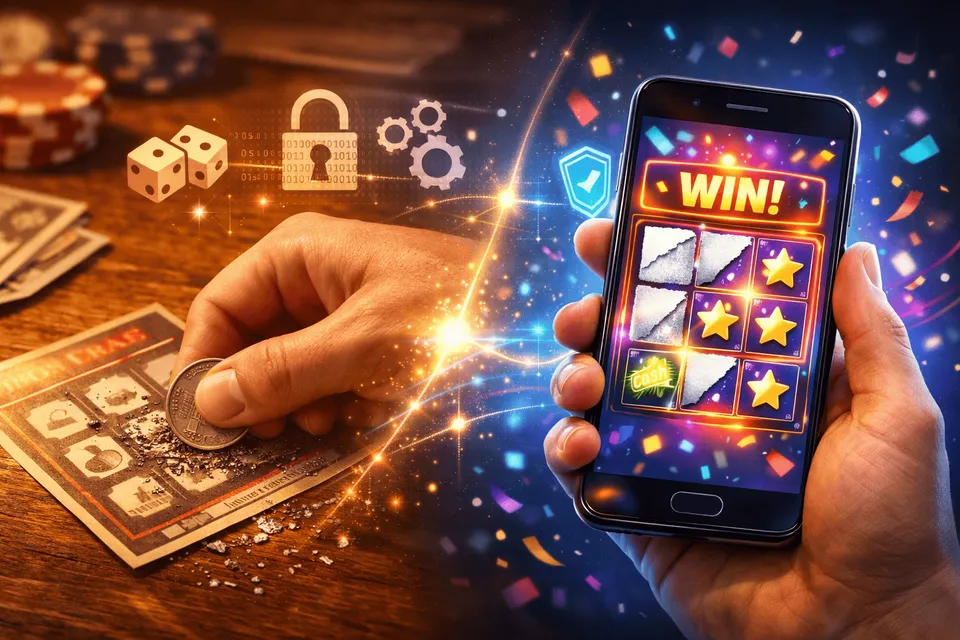
There is a specific, universally recognized thrill associated with the sound of a coin scraping against a foil panel. For decades, that sound has signaled the potential for life-changing instant wealth. While lottery draws require patience, scratch cards offer immediate gratification.
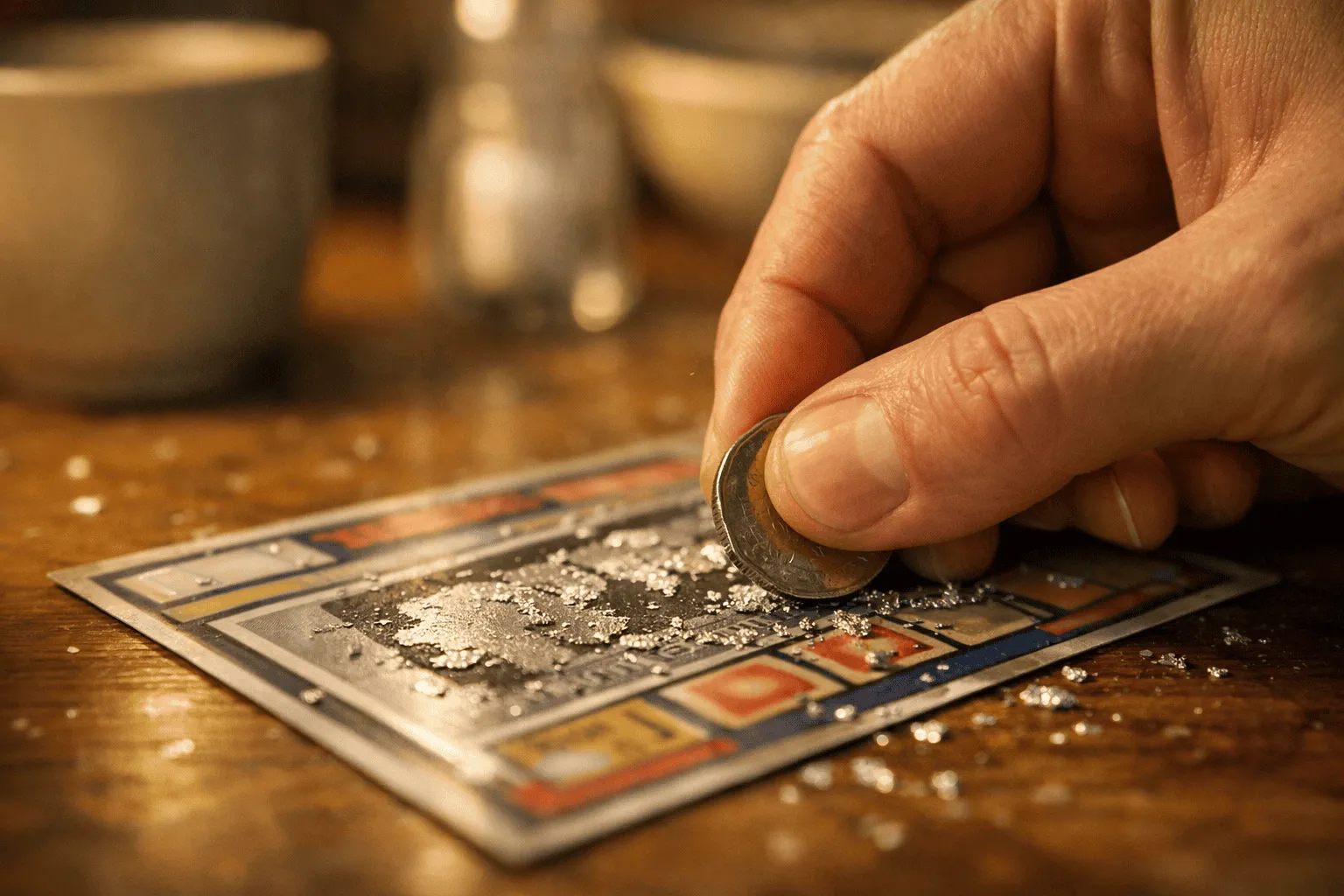
But how did we get from simple cardboard tickets sold at gas stations to the immersive, animated instant-win games found on modern online casino platforms? The history of scratch cards is a fascinating journey of technological innovation, mathematical ingenuity, and changing consumer habits. This article explores the evolution of the scratch card, fun facts about its biggest winners, and why the digital version is currently dominating the gaming world.
The Origins: Computer Science Meets Marketing (1974)
Unlike ancient forms of gambling like dice or keno, the scratch card is a relatively modern invention. Its story begins in the early 1970s, a time when state lotteries were strictly “draw-based.” Players bought a ticket and had to wait days—sometimes a week—to find out if they had won. This delay often dampened the excitement and limited sales volume.
The revolution came from two American innovators: John Koza, a computer scientist with a PhD from the University of Michigan, and Daniel Bower, a retail promotions expert.
- The Problem: Lotteries were passive and slow.
- The Solution: An instant lottery game where the results were pre-determined by an algorithm but hidden from the player until the moment of play.
In 1974, the pair founded the Scientific Games Corporation. Koza wrote the complex algorithm that ensured the randomness and security of the cards, ensuring the lottery commission could control the payout odds precisely. Bower used his marketing expertise to design the physical cards with an enticing foil covering.
The first instant lottery game was launched in Massachusetts in 1974. It was called “The Instant Game.” It was an immediate sensation. Revenue for the state lottery generated by the new game was expected to be around $1 million; instead, it generated $2.7 million in the first week alone. The era of the “instant win” had begun. (Read more background on the Massachusetts Lottery’s pioneering instant ticket history in this Scientific Games overview.)
The Golden Age of Paper Scratch-Offs
Following the massive success in Massachusetts, other states and countries scrambled to adopt this new format. By the 1980s, scratch cards (often called “scratch-offs,” “scratchies,” or “instant tickets”) were a staple in convenience stores across North America and Europe.
Evolution of Design and Security
As the stakes got higher, so did the need for security. Early cards were relatively simple, but fraudsters quickly tried to find ways to “see” through the coating without scratching it (using strong lights or chemicals). This led to significant manufacturing advancements:
- Multi-layered security: Manufacturers began using heavy card stock, confusing patterns (wireframes) under the coating to block “candling” (shining a light through), and chemical-reactive inks that would bleed if tampered with.
- Themes and Licensing: Initially, cards were just numbers. By the 90s, lotteries began licensing popular brands. You could buy scratch cards themed around Monopoly, Harley Davidson, or major sports teams. This branding drew in demographics who might not otherwise play the lottery.
Fun Facts and Record-Breaking Wins
The culture of scratch cards has produced some incredible stories over the last 50 years. Here are a few notable facts and winner stories that highlight the game’s unpredictability.
The “Luckiest” Woman
In 2010, Joan Ginther famously cemented her status as one of the luckiest scratch card players in history. A former math professor with a PhD from Stanford, Ginther won multi-million dollar jackpots in the Texas Lottery four separate times, totaling over $20 million. While conspiracy theorists have speculated she “cracked the code” of the shipping algorithm, no evidence of wrongdoing was ever found. She simply bought an incredibly high volume of high-stakes tickets.
The Accidental Winners
Many big wins happen by mistake. There are numerous recorded instances where a clerk accidentally handed a customer the wrong ticket, the customer decided to keep it, and it turned out to be a jackpot winner. It is a testament to the “fate” aspect that makes these games so appealing to casual players.
The $10 Million Tickets
In the early days, top prizes were often $10,000 or $100,000. Today, “high roller” scratch cards exist with entry prices of $20, $50, or even $100 per ticket, offering top prizes of $5 million to $10 million. These “super tickets” compete directly with the jackpots of smaller draw games.
The Digital Revolution: Moving to Online Instant Wins
With the rise of the internet in the late 1990s and early 2000s, the gambling industry began its migration online. Poker and sports betting moved first, but scratch cards soon followed. However, the transition required a shift in technology.
If you’re exploring the broader shift from retail games to internet platforms, you may also want to compare how different online casinos offer instant-win titles alongside slots, live casino, and other fast-play formats.
How Digital Scratch Cards Work
Physical cards rely on a pre-printed distribution. If there are 1 million tickets printed, there is a finite number of winners hidden in that batch. Once the winning ticket is sold, it is gone.
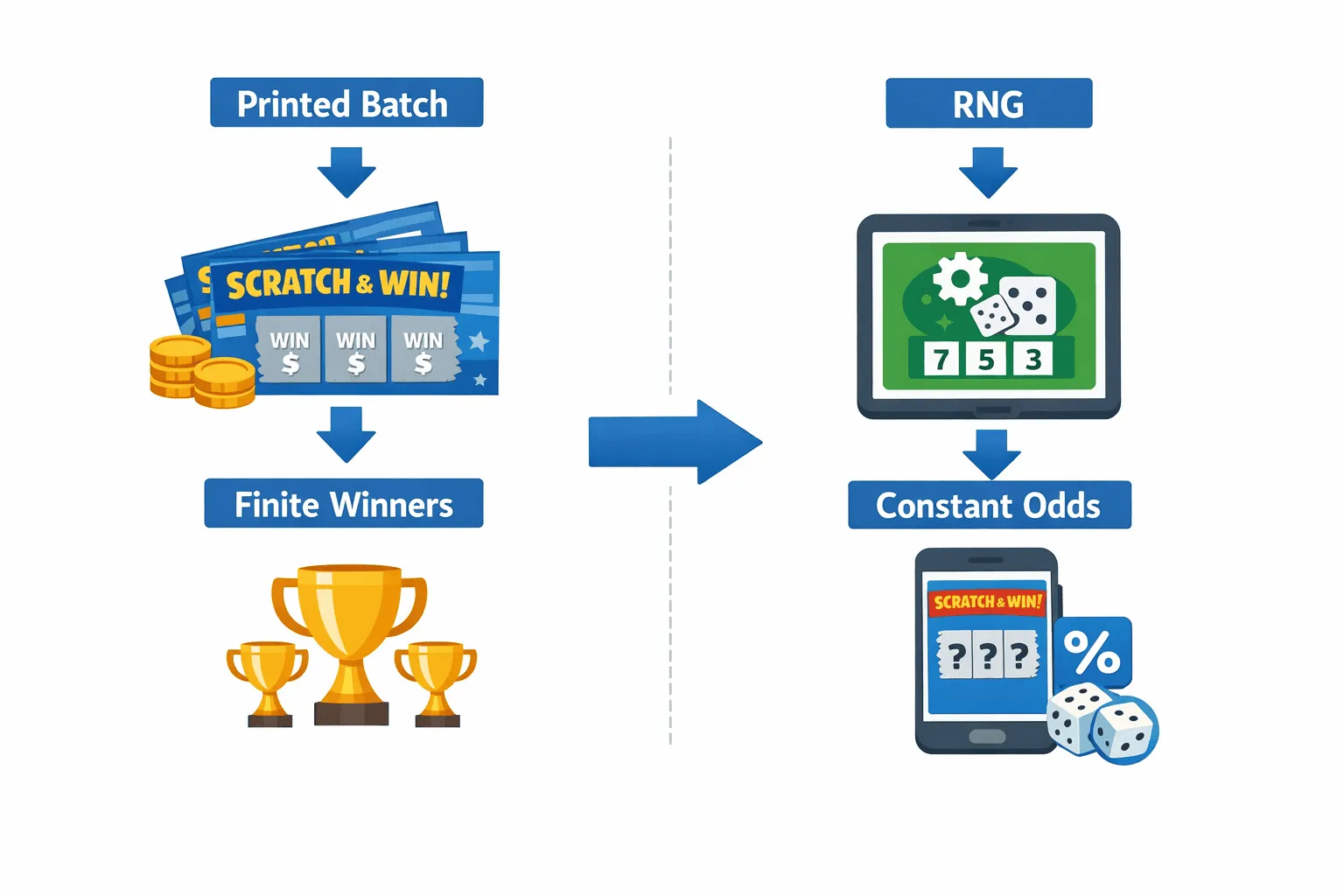
Digital scratch cards (often found at online casinos) utilize a Random Number Generator (RNG). This is the same technology used in online slots. Every time you click “Buy Card” or “Scratch,” the RNG cycles through millions of number combinations to determine the outcome instantly. (For a regulator’s perspective on fairness requirements and preventing “adaptive” odds changes, see the UK Gambling Commission’s Remote gambling technical standards on generating random outcomes.) This means:
- The odds are constant (they don’t change based on how many people have played before you).
- The potential for winning is always active; you are never buying from a “depleted” batch.
Why Are Online Scratch Cards So Popular Today?
Despite the tactile satisfaction of scratching a physical card, the digital format has seen explosive growth. Several key factors contribute to this shift in player preference.
1. Instant Gratification 2.0
Physical cards require a trip to the store. Online games are available 24/7 on mobile devices. For a generation accustomed to on-demand entertainment, the ability to play a quick game while waiting for a bus or during a commercial break is a major draw.

2. Enhanced Gameplay and Themes
Paper cards are limited by physics. Digital cards are not. Modern online instant-win games blur the line between scratch cards and video slots. They feature:
- Animations: Panels explode or dissolve rather than just being scratched off.
- Sound Effects: Winning is accompanied by celebratory music and audio cues.
- Bonus Rounds: Some digital scratch cards trigger mini-games or “second screen” bonuses, adding a layer of depth that cardboard simply cannot offer.
3. Variable Betting Limits
In a retail store, a ticket has a fixed price (e.g., $5). Online, players can often adjust their wager size on a single game. You might play a round for $0.50 or scale it up to $100, giving the player more control over their bankroll management.
To keep those flexible stakes from getting away from you, it helps to follow a simple plan for risk management in gambling (especially if you’re playing fast, repeatable games like instant wins).
4. Return to Player (RTP) Percentages
Generally speaking, online scratch cards tend to offer a higher Return to Player (RTP) percentage compared to their physical counterparts. Physical lotteries have high overheads (printing, distribution, retailer commissions) and typically offer payouts ranging from 50% to 65%. Online instant win games often boast RTPs in the 85% to 95% range, providing better theoretical value to the player over time.
Related: If you’re comparing “value” across casino games, you can also use these proven gambling strategies as a checklist to avoid common mistakes that reduce your expected return.
The Psychology Behind the “Scratch” (Why It’s So Hard to Stop)
Part of the enduring appeal—both on paper and online—comes down to basic behavioral psychology. Many gambling products are reinforced through intermittent rewards, a pattern known to create persistent “keep trying” behavior. If you want a quick refresher on how variable reinforcement schedules work (and why they can be so compelling), see this plain-language overview from a university psychology textbook: Operant Conditioning (Introduction to Psychology).
Because scratch cards and instant-win games are designed to feel fast, simple, and low-effort, it can also be easy for play time (and spend) to creep upward—especially when someone starts “chasing losses” after a near miss.
That “near miss” feeling is also closely connected to cognitive biases like the gambler’s fallacy and the belief that a win is “due” (sometimes called the fallacy of the maturity of chances).
The Future of Instant Wins
As technology evolves, so does the humble scratch card. We are already seeing the integration of Augmented Reality (AR) where players can scratch physical cards and scan them with their phones to reveal 3D animations or secondary prizes.
From John Koza’s first algorithm in 1974 to the immersive mobile experiences of today, the scratch card has proven to be a resilient and adaptable form of entertainment. Whether executed with a coin on a kitchen table or a swipe of a finger on a smartphone, the core appeal remains the same: the timeless hope that a life-changing moment is hidden just beneath the surface.
If gambling stops being fun: If you (or someone you care about) is worried that instant-win games are turning into a compulsion, the National Council on Problem Gambling provides support resources and the National Problem Gambling Helpline (call/text/chat) here: Help & Treatment (NCPG).
Related guides
Knowledge Base-
Live Dealer vs. RNG Blackjack: Odds, Speed, and Strategy Compared
Compare Live Dealer vs. RNG Blackjack to find the best odds and speed. Discover how gameplay style, fairness, and strategy differ in this expert guide.
Knowledge Base
-
RTP vs. Volatility: How to Choose the Right Slot for Your Budget
Learn the difference between RTP and volatility in slots. Discover how to choose the right game to maximize your playtime and match your budget.
Knowledge Base
-
Data-Driven Bankroll Management: Using the Kelly Criterion in Online Casinos
Master data-driven bankroll management with the Kelly Criterion. Learn how to optimize bet sizing, manage risk, and maximize growth in online casinos.
Knowledge Base