
Responsible Gambling Guide: Limits, Risks & Safety Tips
Discover essential tips for responsible gambling, including limits, risks, and safety strategies to ensure a secure gaming experience.

Gambling is a form of entertainment enjoyed by millions worldwide, but it carries inherent risks that must be managed with care. Unlike buying a movie ticket or a video game, the cost of this entertainment isn’t fixed—it depends entirely on how you manage your behavior, your time, and your money.
Responsible gambling isn’t just about preventing addiction; it is about maximizing enjoyment and minimizing harm. Whether you play poker, slots, or bet on sports, understanding the mechanics of control is essential. In this guide, we will explore practical strategies for bankroll management, setting effective limits, and recognizing when it is time to step back.

What is Responsible Gambling?
At its core, responsible gambling means viewing betting as a pastime rather than a way to make money. It involves exercising control over your gambling activity to ensure it doesn’t negatively impact your life or the lives of those around you. It is the ability to make informed decisions, knowing the odds, and accepting the risks before placing a bet.
Key Principles of Safer Gambling:
- Expectation of Loss: The “House Edge” ensures the operator wins in the long run. Treat any win as a bonus, not a salary.
- Balanced Lifestyle: Gambling should not interfere with work, family time, or other hobbies.
- Emotional Control: Never gamble when you are upset, depressed, or under the influence of alcohol or drugs.
For a broader look at reducing downside and staying intentional with your play, you may also like our guide on risk management in gambling.
The Risks: Understanding the Psychology of Betting
To gamble responsibly, you must understand why it can be risky. Gambling triggers the brain’s reward system, releasing dopamine similarly to how food or social interactions do. If you’d like a deeper, evidence-informed overview of how gambling can “hook” attention and motivation through reward circuitry, read more here: How the Brain Gets Addicted to Gambling (Scientific American).
The Gambler’s Fallacy
One of the biggest pitfalls is the Gambler’s Fallacy—the mistaken belief that if an event happens more frequently than normal during a certain period, it will happen less frequently in the future (or vice versa). For example, believing that because a roulette ball landed on “Red” five times in a row, “Black” is due. In reality, every spin, hand, or roll is an independent event. For a clear explanation of why independence matters (and why streaks don’t “owe” you an outcome), see: Gambler’s fallacy (overview and examples).
If you want examples of how this thinking shows up in real gambling situations (and how to avoid it), see our article: What is the Gambler’s Fallacy? You can also read about a closely related concept here: the fallacy of the maturity of chances.
Practical Guidance: How to Maintain Control
Control isn’t about willpower alone; it’s about setting up systems that prevent you from making impulsive decisions.
1. Bankroll Management
Your bankroll is the specific amount of money you have set aside strictly for gambling. It should be money you can afford to lose without affecting your rent, bills, or savings.
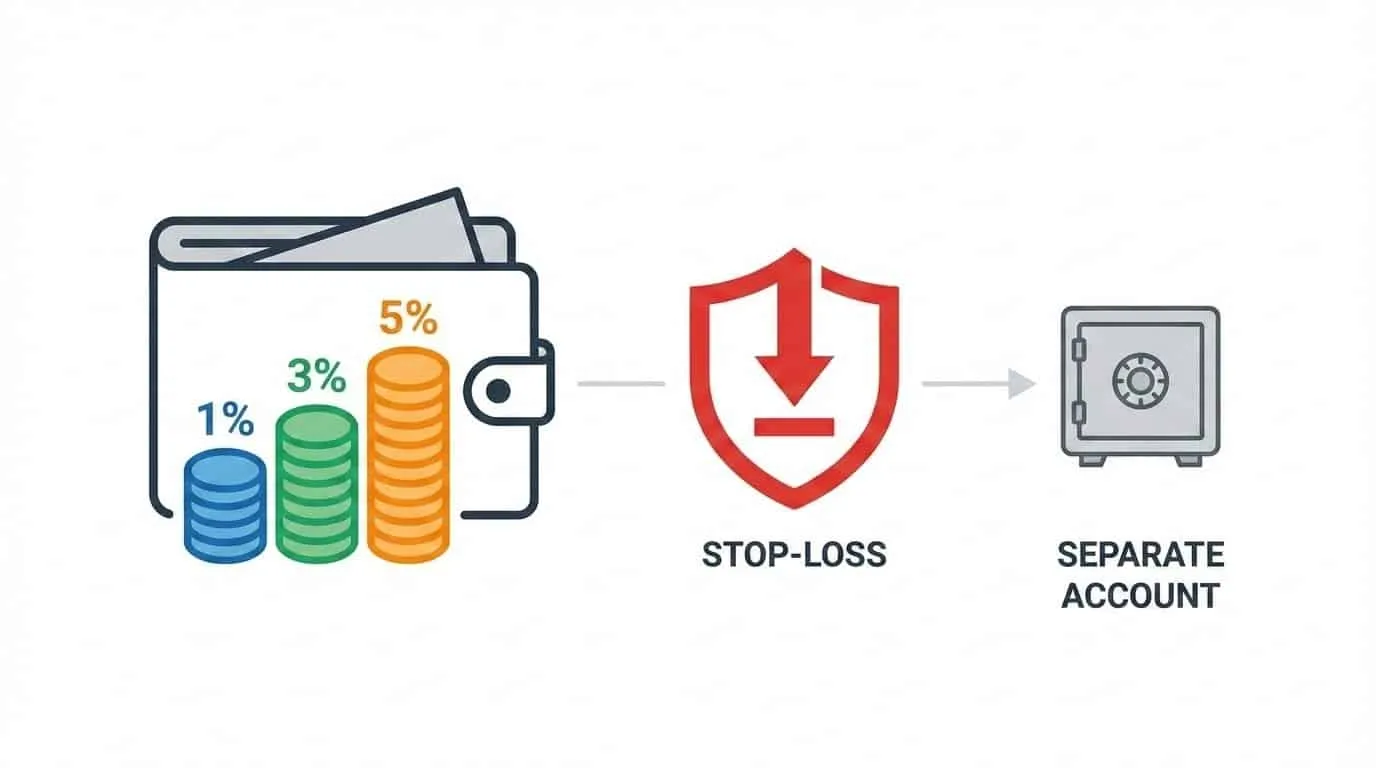
- The 1% to 5% Rule: A common strategy used by professional bettors is to never wager more than 1% to 5% of their total bankroll on a single bet. This protects you from losing everything in a bad streak.
- Separate Accounts: Consider using a dedicated e-wallet or a separate bank account for gambling transactions. This prevents gambling funds from mixing with daily living expenses.
- Stop-Loss Limits: Decide on a specific loss figure before you start. If you lose that amount, the session ends immediately.
For additional practical tactics and a few common mistakes to avoid, read: Risk Management in Gambling.
2. Time Management
Casinos and betting apps are designed to be immersive. They often lack clocks or windows to distort your sense of time.
- Set Reality Checks: Most reputable gambling sites offer “Reality Check” tools that pop up every 30 or 60 minutes to remind you how long you’ve been playing and how much you’ve won or lost. Enable these.
- The Alarm Method: Set a physical alarm on your phone for your session duration (e.g., 1 hour). When it rings, you log out—no excuses.
- Cool-Off Periods: If you feel your emotions rising, use the “Cool-Off” feature provided by operators to lock your account for 24 hours to a few days.
Warning Signs of Problem Gambling
Problem gambling often develops silently. Being honest with yourself about these red flags is crucial for early intervention. For a clinically grounded list of common signs (including “chasing losses,” irritability when trying to stop, and risking relationships or work), you can read more here: Compulsive gambling (gambling disorder): symptoms & causes (Mayo Clinic).

Financial Signs
- Borrowing money to gamble.
- Selling possessions to fund bets.
- Being secretive about financial records or hiding bank statements.
- Gambling with money meant for essentials like rent or food.
Emotional & Behavioral Signs
- Chasing Losses: Trying to win back money you’ve lost by betting larger amounts. This is the fastest route to significant financial harm.
- Mood Swings: Feeling extreme highs when winning and deep despair or irritability when losing.
- Tolerance: Needing to bet larger amounts of money to get the same thrill or excitement.
- Neglect: Ignoring work, family, or personal hygiene to gamble.
When to Step Back
Knowing when to quit is a skill. It is not just about quitting when you are ahead; it is about quitting when you are no longer in control.
Step back immediately if:
- You are no longer having fun.
- You are betting to escape real-life problems or stress.
- You find yourself lying about how much time or money you spend gambling.
- You feel an urge to gamble that you cannot resist.
Using Operator Tools
Regulated gambling operators are required to provide tools to help you. Do not view these as restrictions, but as safety belts.
- Deposit Limits: Cap how much you can deposit daily, weekly, or monthly.
- Wager Limits: Cap the total amount you can bet in a period.
- Self-Exclusion: A voluntary process where you ban yourself from gambling services for a set period (6 months to 5 years).
Resources and Help
If you or someone you know is struggling, professional help is available and effective. You do not have to face this alone.
- USA: National Council on Problem Gambling (1-800-522-4700) — you can learn more about the 24/7 National Problem Gambling Helpline (call/text/chat) here: About the National Problem Gambling Helpline™ (NCPG)
- UK: GamCare and GambleAware
- International: Gamblers Anonymous
Disclaimer: The information in this article is for educational purposes only and does not constitute financial or medical advice. If you have a gambling problem, seek professional help immediately.
Related guides
Knowledge Base-
Live Dealer vs. RNG Blackjack: Odds, Speed, and Strategy Compared
Compare Live Dealer vs. RNG Blackjack to find the best odds and speed. Discover how gameplay style, fairness, and strategy differ in this expert guide.
Knowledge Base
-
RTP vs. Volatility: How to Choose the Right Slot for Your Budget
Learn the difference between RTP and volatility in slots. Discover how to choose the right game to maximize your playtime and match your budget.
Knowledge Base
-
Data-Driven Bankroll Management: Using the Kelly Criterion in Online Casinos
Master data-driven bankroll management with the Kelly Criterion. Learn how to optimize bet sizing, manage risk, and maximize growth in online casinos.
Knowledge Base