Loss Aversion Explained: Why Losing $50 Hurts More Than Winning Feels Good
Discover loss aversion bias and why the pain of losing outweighs the joy of winning. Learn how this psychology affects your money and decisions.
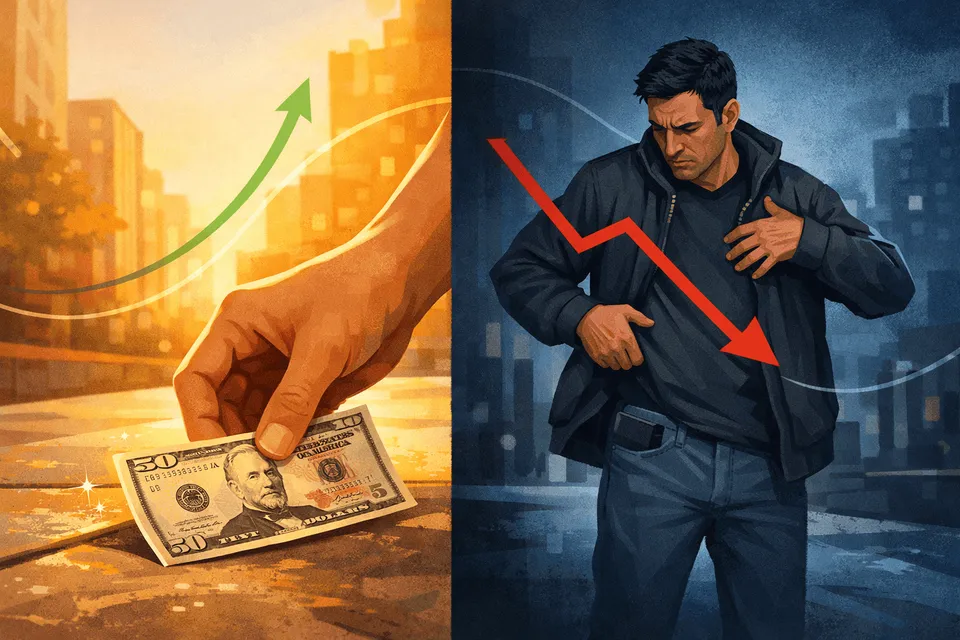
Imagine you are walking down the street and you find a $50 bill. The rush of dopamine is immediate; your day just got better. Now, imagine a different scenario: you reach into your pocket to pay for lunch and realize you’ve lost a $50 bill. The sinking feeling in your stomach is sharp and lingering.

Mathematically, the value is identical: $50. Yet, psychologically, these two events are worlds apart. For most people, the pain of losing that $50 is significantly more intense than the pleasure of finding it. This phenomenon is known as loss aversion, a cognitive bias that silently steers many of our financial, professional, and personal decisions.
What Is Loss Aversion?
Loss aversion is a core concept in behavioral economics which suggests that the pain of losing is psychologically about twice as powerful as the pleasure of gaining. In simple terms, it is better not to lose $50 than to find $50. For a deeper, research-backed definition and examples, read more at BehavioralEconomics.com’s mini-encyclopedia entry on loss aversion.
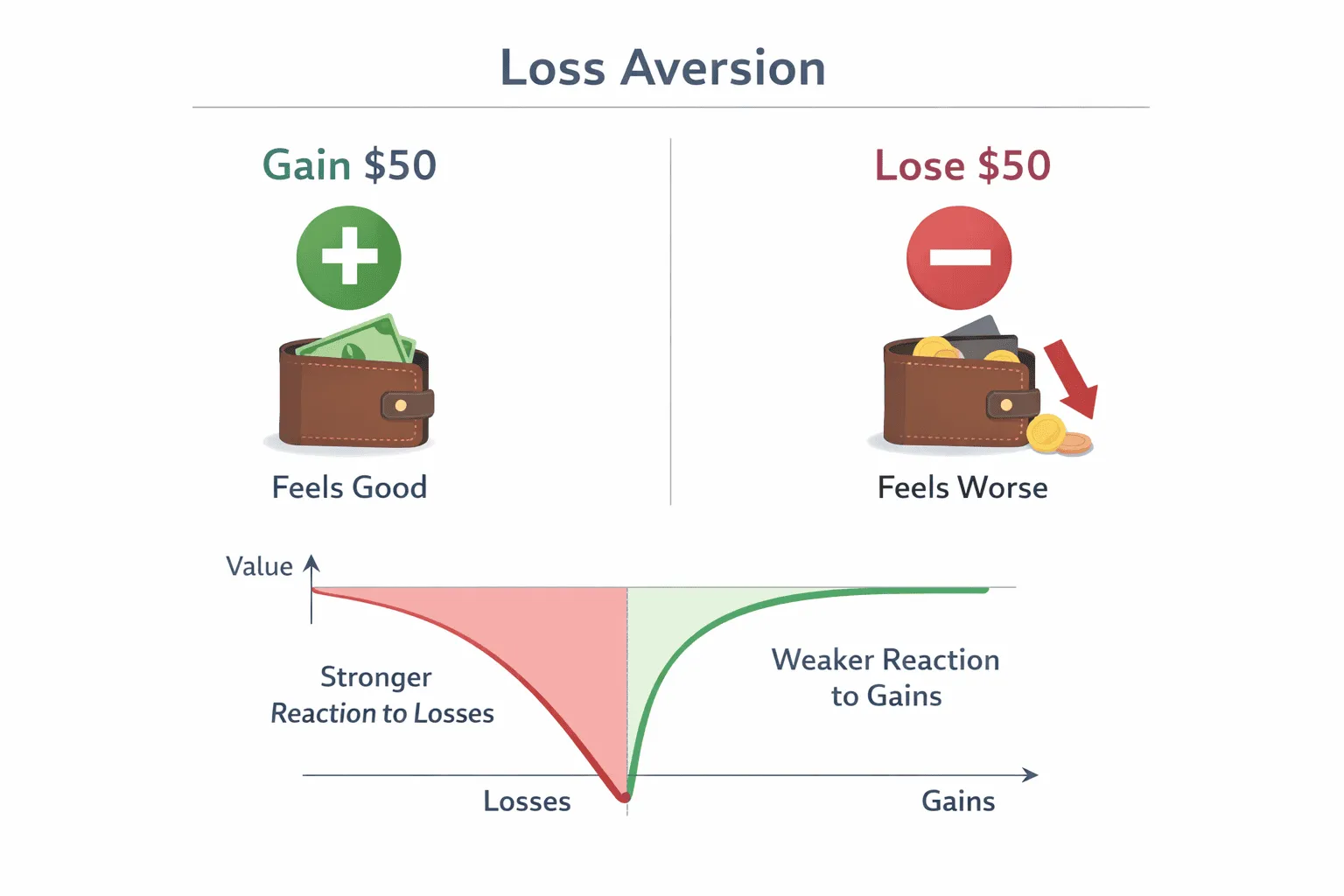
This bias explains why we often cling to bad investments, stay in unfulfilling jobs, or buy insurance for low-risk events. We are wired to prioritize avoiding pain over acquiring equivalent gains.
The Origins: Prospect Theory
The term was popularized by psychologists Daniel Kahneman and Amos Tversky in 1979 as part of Prospect Theory. Their research revolutionized economics by challenging the traditional assumption that humans are rational actors who always maximize utility. Instead, they demonstrated that human decision-making is heavily influenced by how choices are framed—specifically, whether they are presented as a potential gain or a potential loss. You can see the original citation listed on Daniel Kahneman’s Princeton publications page.
The Psychology Behind the Bias
Why are our brains wired this way? Evolutionary psychologists believe the roots of loss aversion lie in our survival instincts. For our ancestors, obtaining extra food was nice, but losing their existing food supply could mean death. Therefore, the brain evolved to treat threats (losses) as more urgent than opportunities (gains).
While this mechanism kept early humans alive, in the modern world, it often leads to irrational behaviors. The “threat” of a stock market dip or a wasted gym membership triggers the same alarm bells as a predator stealing our food.
Real-World Examples of Loss Aversion
You encounter loss aversion daily, often without realizing it. Here is how it manifests in different areas of life:
1. Marketing and Sales
Marketers are masters at leveraging this bias. Have you ever seen a countdown timer on a website or a “Only 2 items left!” warning? This triggers the Fear of Missing Out (FOMO), a direct offspring of loss aversion.
- Free Trials: Companies offer free trials because once you “own” the subscription for a month, giving it up feels like a loss.
- Limited-Time Offers: Framing a discount as something you will “lose” if you don’t act now is more effective than simply presenting it as a gain.
2. Investing and Finance
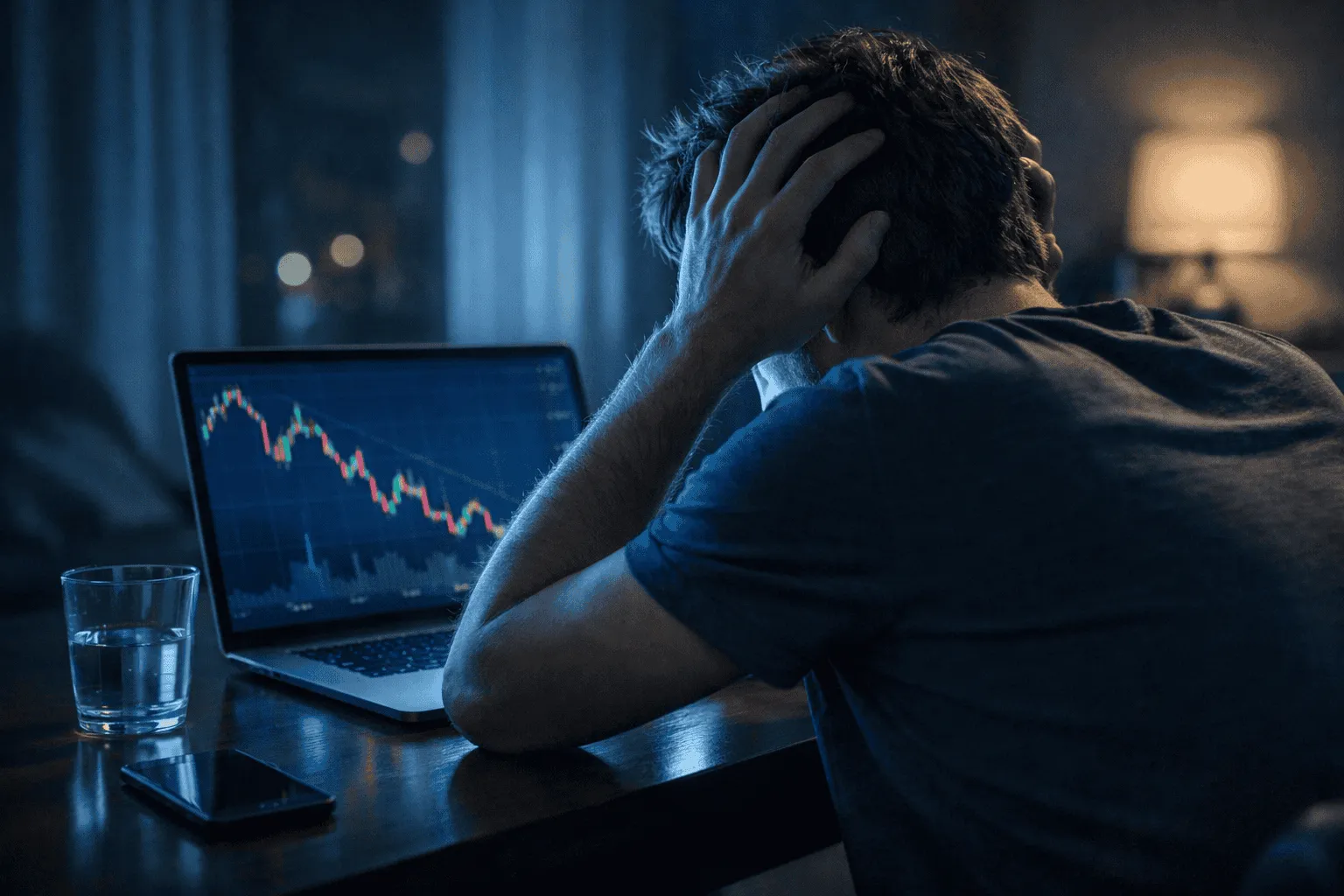
In the stock market, loss aversion is frequently responsible for the disposition effect. Investors tend to sell winning stocks too early (to lock in the gain) and hold onto losing stocks too long (hoping to avoid realizing the loss). Facing the loss feels like admitting defeat, so they hold on until the loss becomes catastrophic.
If you see this mindset showing up in gambling decisions too, it can help to zoom out and draw a hard line between play and risk—see When to Walk Away: Knowing the Difference Between Entertainment and Risk.
3. Negotiation and Salary
Employees often fear negotiating for a higher salary because the potential “loss” of the job offer or the employer’s goodwill feels weightier than the potential “gain” of a higher paycheck. Similarly, unions will fight much harder to prevent a pay cut than they will to secure a pay raise of the same amount.
The Sunk Cost Fallacy
Loss aversion is closely tied to the sunk cost fallacy. This occurs when we continue a behavior or endeavor as a result of previously invested resources (time, money, or effort). Because we hate to “lose” that investment, we throw good money after bad.
Example: You finish reading a terrible book simply because you are already 100 pages in. Stopping feels like “wasting” the time you already spent.
This same “I can’t quit now” feeling is common in casino play too, especially after a losing streak. If you want a practical, gambling-specific framework for staying in control, read Responsible Gambling Guide: Limits, Risks & Safety Tips.
How to Overcome Loss Aversion
Recognizing the bias is the first step toward mitigating it. Here are practical strategies to make more rational decisions:
Reframe the Narrative
Try to view a decision from a third-party perspective. If you are holding a losing stock, ask yourself: “If I didn’t own this stock today, would I buy it at its current price?” If the answer is no, the rational move is to sell.
The Overnight Test
Imagine you went to sleep and your current situation was reversed. If you are staying in a job you hate, imagine you were fired overnight. Would you apply for that same job the next morning? If not, you are likely suffering from loss aversion.
Focus on the Big Picture
Loss aversion makes us hyper-focused on immediate, short-term losses. Shift your focus to long-term goals. In investing, this means looking at your portfolio’s performance over years, not days. In life, it means valuing your future happiness over the temporary discomfort of change.
In gambling contexts, “big picture” thinking also means understanding the math you’re up against. A helpful companion read is Understanding Casino Odds, RTP & House Edge, which breaks down what outcomes look like over time.
A Quick Note: Is Loss Aversion Always the Whole Story?
Loss aversion is widely taught and supported in behavioral research, but some psychologists and decision scientists argue that certain results attributed to “loss aversion” can sometimes be explained by other mechanisms (like inertia or a reluctance to change). If you want a thoughtful critique and discussion of the debate, see this overview from the Association for Psychological Science (APS).
Summary
Loss aversion is a powerful psychological force. It explains why losing $50 stings more than finding $50 satisfies. While it once helped us survive in the wild, today it often holds us back from making logical financial and life choices. By understanding this bias, you can learn to let go of the fear of loss and open yourself up to the potential of future gains.
If you’re reading this through a gambling lens, it also helps to understand why games and environments can feel so compelling—see The Psychology of Gambling: Why Casinos Feel So Engaging.
Related guides
Knowledge Base-
Live Dealer vs. RNG Blackjack: Odds, Speed, and Strategy Compared
Compare Live Dealer vs. RNG Blackjack to find the best odds and speed. Discover how gameplay style, fairness, and strategy differ in this expert guide.
Knowledge Base
-
RTP vs. Volatility: How to Choose the Right Slot for Your Budget
Learn the difference between RTP and volatility in slots. Discover how to choose the right game to maximize your playtime and match your budget.
Knowledge Base
-
Data-Driven Bankroll Management: Using the Kelly Criterion in Online Casinos
Master data-driven bankroll management with the Kelly Criterion. Learn how to optimize bet sizing, manage risk, and maximize growth in online casinos.
Knowledge Base